The Dark Side of Industrial Development The Challenge of Ludhiana Gas Leakage
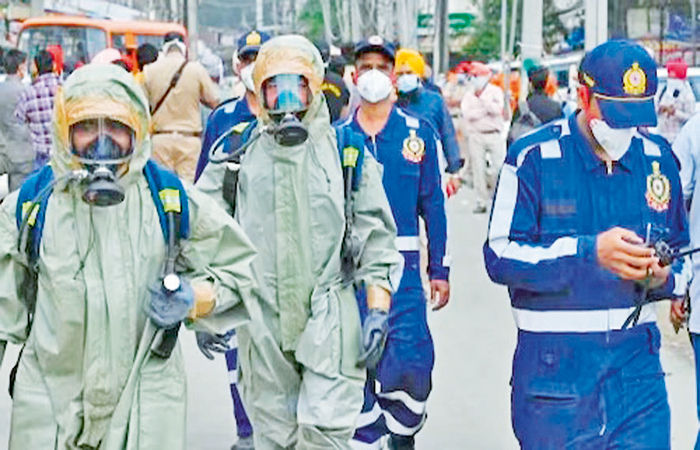
- Bhopal's gas tragedy comes to the fore
- Occasional
- Also the fact that toothless pollution boards are not bumped by the factory...
Amid the news of Karnataka elections and Sharad Pawar's resignation, the serious gas leakage incident near Ludhiana has not gone unnoticed. The National Green Tribunal is investigating. Rs 20 lakh has been given to the relatives of the deceased. By June 30, the tribunal will submit its report, which may reveal which gas has leaked. Chemical industries grow, but there are no strict instructions on how to dispose of their chemical waste in specific places. There are no restrictions either. Businesses have to make money and hardly think about public health.
Ludhiana is an industrial city. Gas leakage from nearby Giaspur has claimed the lives of 11 people including children. Authorities are still puzzled over how the gas leaked. The state police has formed a five-member team, while on the other hand, the Punjab Pollution Control Board has also come into the fray.
It is not known what kind of gas leaked, but it is said that some chemical mixed with the sewage water and the released gas caused the explosion. It is certain that the gas that came out suffocated people. What kind of chemical substance was mixed with sewage water is being investigated. Local people are also giving information to the authorities about which factory's water falls into the drain. The Punjab Pollution Control Board believes that the substance mixed with water can be toxic.
The problem is that the Pollution Control Board is awake only when such accidents happen. Last year too, incidents of gas leakage were reported in the country, but hardly any attention is paid to it. Also the fact that toothless pollution boards are not factory knotted. Many small factories use ammonia, which has also led to minor accidents of gas leakage, but these are not noticed until a major accident occurs.
Industries have grown, jobs have also grown with it, but with it, people's safety has not been thought of much. People live in large settlements near factories emitting chemical fumes. After processing in some industrial estates, excess chemical waste is dumped into nearby drains or water channels. Agricultural crops get burnt due to chemical waste mixing in canal water. When it mixes with sewage water, a strong gas is released from inside. People living in industrial areas are used to it. Due to this gas, the eyes of the passers-by start burning and they leave the place in a hurry. Industrial safety is found in large factories, but the focus of smaller units is more on profit. Not much work has been done there in the name of industrial safety.
Chemical waste falling into the sewer can prove very deadly. When it comes to gas leakage, the Bhopal gas disaster of 1984 comes to the fore. 3,500 more people died of suffocation in their sleep when gas leaked from the Union Carbide Company early in the morning. There, too, age-old chemical waste proved to be a menace to agricultural land. Even then, the owner of the company fled to America due to lack of law enforcement. The man responsible for thousands of deaths was allowed to escape. Methyl isocyanate gas leaked from the union carbide. The chemical waste on the ground seeped into the ground, causing erosion of nearby soils.
Human life is dying in the wake of industrial development. Authorities need to know what chemical factories make in all industrial estates and where and how they dispose of their waste. The government needs to warn people by giving importance to the incident of Ludhiana gas leakage.


Comments
Post a Comment